Tok Pisin
The performance
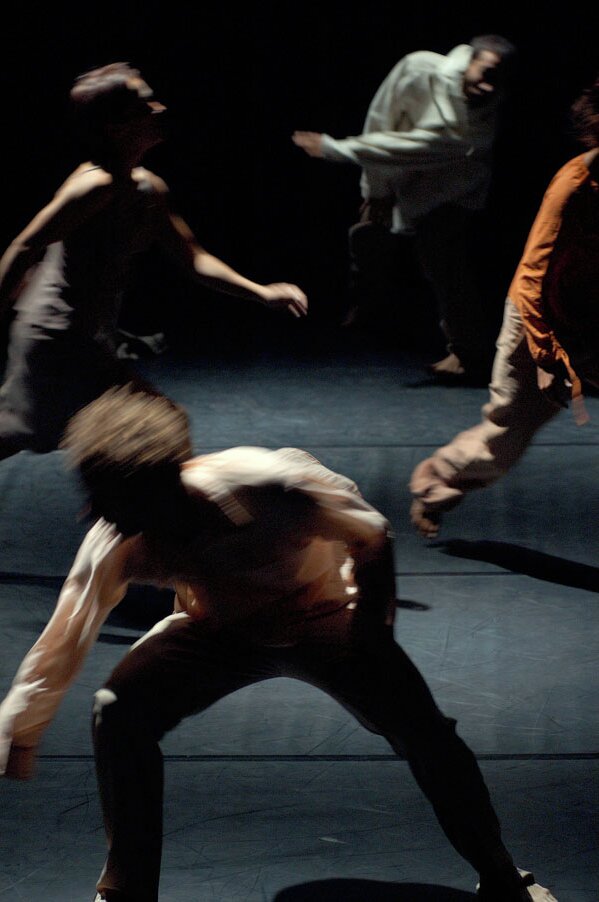
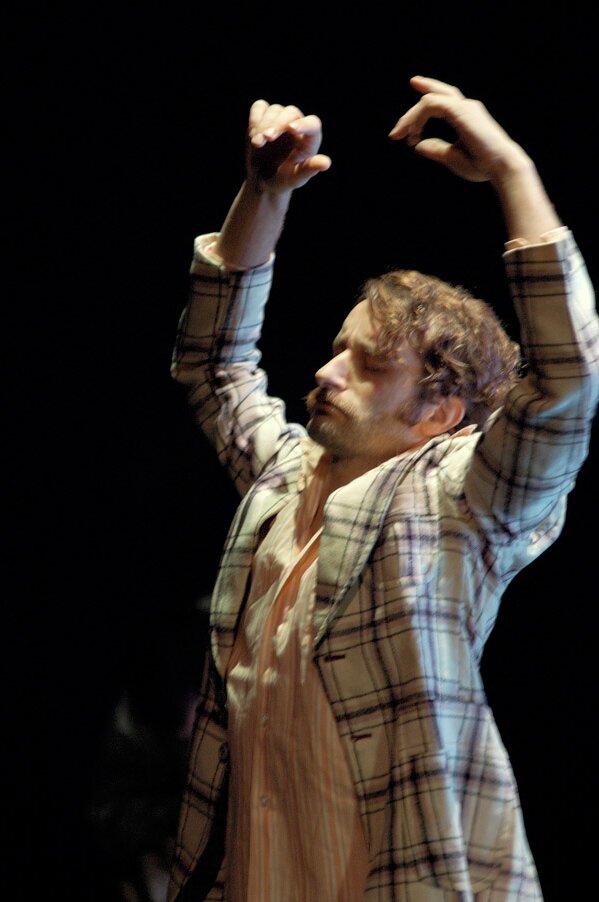
Four characters enter a journey to pursue the last white spot still left on the map – Papua New Guinea. The trip becomes increasingly delusive. Their search for exoticism is revealed more and more as a substitute for their own lack of identity. The hollow anticlimax is a fact even long before arrival. Not a happy end, actually.
TOK PISIN as a term is an official language on Papua New Guinea, more known as Pidgin English. It has evolved in strange ways, mixing elements from English, German, Portuguese, and some of the 720 totally different languages spoken on the island. The evolution has forced itself through without interference from academic guidelines or linguistic methods. Grammar and vocabulary has been formed through verbal and analphabetic practice, and therefore Tok Pisin is quite different from other pidgin languages like for instance the grammatically complex Afrikaans in South Africa.
One ambition of the show was to develop choreography similar to the way Tok Pisin developed as a language. Which meant to let movement influences evolve in autodidact ways and neglecting any acedemic analysis of the material presented.
This show will not be performed again.
Length: 60 min
Language: None
Premiere: Ouagadougou, Burkina Faso, July 2003
Media
Previously touring
Burkina Faso, Cuba, Denmark, France, Lithuania, Norway, Poland, Portugal, Russian Federation, SwedenCredits
Concept, costumes, set design: Jo Strømgren
Choreography, dance: Line Tørmoen, Maxime Iannarelli, Yasmine Hugonnet, Jo Strømgren
Music: Jørgen Knudsen
Lighting design: Stephen Rolfe
Sound design: Lars Årdal
Production: Jo Strømgren Kompani
Co-production: Danse à Aix (France), Synalephe (France), Norwegian National Theatre, The House of Dance Stockholm, Lithuanian Dance Information Centre, Rui Horta / Centro Coreográfico de Montemor-o-Novo (Portugal)